


🧬 How Redox Signalling Shapes Your Strength After 40 — and How ASEA May Help

Let’s talk about something that might just change how you see your health and strength journey.
We’re often told to lift weights, eat our greens, and get 8 hours of sleep — and yes, those things matter. But what if there was something even more foundational your body relies on to help you recover, stay strong, and keep moving?
✨ It’s called redox signalling — and once I understood it, it honestly changed how I support my energy, recovery, and overall strength.
Let me break it down in real-talk (with a little science, but not too much!).
🔬 What the Science Says

Redox Biology, 2022 — Powers & Schrager
“Redox signalling regulates skeletal muscle remodelling in response to exercise and prolonged inactivity.”
The study explains that:
1️⃣ Your muscles adapt through redox signalling
When you exercise, your muscles produce small bursts of reactive molecules (ROS). These are not bad — they actually signal your body to repair, strengthen, and adapt.
Think of it as your muscles saying: “Okay, let’s grow, let’s get stronger, let’s recover.”

2️⃣ Too much oxidative stress is what causes problems
Short bursts = good
Chronic, ongoing oxidative stress (from inactivity, age, stress, or illness) = not good.
This constant stress can:
slow recovery
weaken muscle tissue
trigger muscle loss
increase fatigue
interfere with repair

3️⃣ Healthy redox balance is essential for ageing well
The study is very clear: A balanced redox environment helps your muscles adapt positively, while an imbalanced one pushes them toward breakdown.
This matters even more for women over 40 because:
hormones shift
recovery slows
inflammation rises
muscle maintenance becomes harder
This is where supporting natural redox signalling becomes incredibly helpful.

💧 So, Where Does ASEA Come Into It?
Now, you know I’m all about real tools that support real women — not quick fixes or hype.
ASEA Redox is something I’ve included in my own routine because it supports the same type of redox signalling the study talks about. It’s a drink that provides stable redox molecules — the same ones our body naturally produces but makes less of as we age.
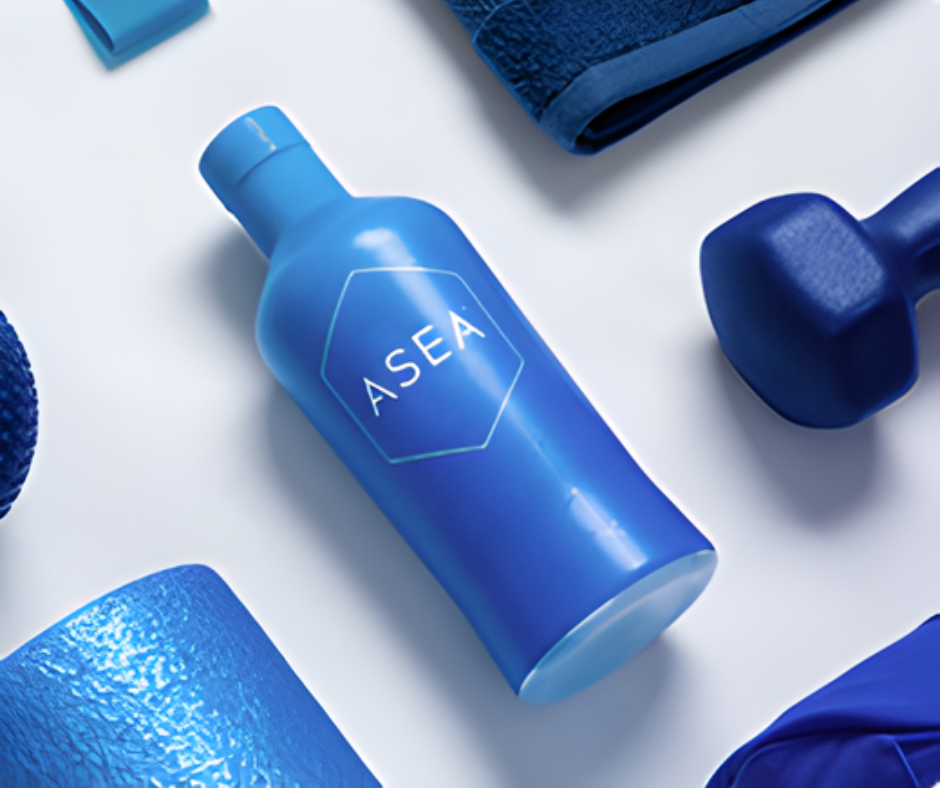
For me, this means:
Better post-workout recovery (hello, aqua and strength sessions!)
Less DOMS (delayed onset muscle soreness)
More energy throughout the week
A stronger foundation — especially during busy, stressful seasons
It’s like giving your body the nudge it needs to do what it’s already meant to do.
💪 The Real-World Impact

This isn’t about being perfect. It’s about staying in the game — feeling good enough to show up for your workouts, your walks, your work, your family, and yourself.
If you’re someone who:
Exercises regularly
Wants to age well and stay strong
Feels like recovery is getting harder
Is juggling hormone changes, stress, and busy weeks…then redox support may be the thing you didn’t even know you were missing.
And I say that from experience — not just as a coach, but as a woman navigating all this alongside you.
🌿 Why I Personally Use ASEA Every Day
As a full-time fitness instructor, coach, and someone who has spent a lifetime helping women feel their best, I’ve felt the shift myself — especially as I’ve moved into my 40s.
Between:
running aqua classes,
strength sessions,
staying active,
and keeping up with my community…
…my body responds so much better when my cellular signalling is supported.
It’s one of the reasons ASEA has become a long-term part of my wellness routine — not a quick fix, but something that complements everything else I do.

💜 If You Want to Learn More or Try ASEA for Yourself
You can explore my ASEA shop here:
Or send me a message — I’m always happy to share the simple explainer I use with clients.
Because when your cells thrive…✨ you thrive.

With strength, wellness, and a whole lot of support,
Kellie Varlet
Restore Renew You


Comments