


You Finish Your Workout and Then What?

Five minutes after your workout could be the most important five minutes of your whole session.
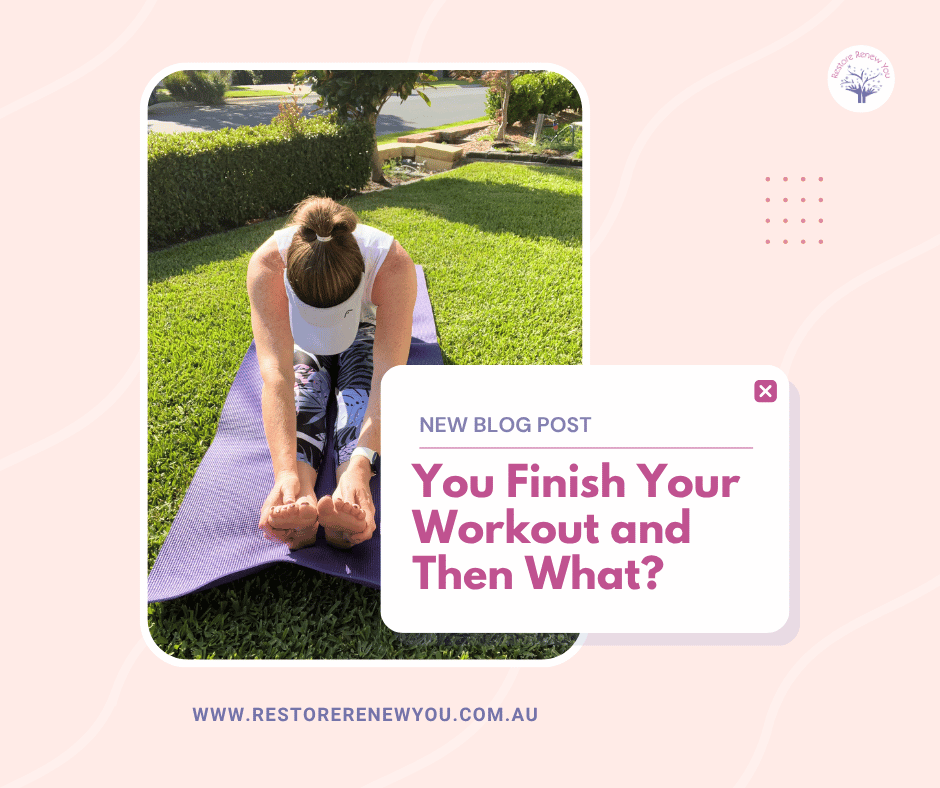
I'm going to be honest about something.
I teach fitness for a living. I know the importance of recovery. I tell people regularly to listen to their bodies and give them what they need.
And then I finish a day of classes, do the bare minimum stretches and head straight home. Every time.
My hip has been letting me know about it lately. Just that low level, persistent kind of discomfort that's easy to ignore until it isn't. And when I actually stopped to think about why, the answer was pretty obvious.
So, I'm changing that. Staying back after classes now. Taking the extra time. Giving my body what it's been asking for instead of rushing past it.
What the Research Says

I expected the research on stretching to tell me I needed more time, more commitment, a dedicated programme.
University of South Australia research found that just eight minutes of stretching a week, spread across a few sessions or done in a couple of minutes at a time, is enough to meaningfully improve flexibility. Eight minutes. Total. Per week.
And the part worth knowing: pushing into pain adds no extra benefit over stretching to mild discomfort. Harder doesn't mean better here. It just means more uncomfortable.
Read more here: https://mackayandwhitsundaylife.com/article/improve-flexibility-with-just-eight-minutes-a-week
A systematic review and meta-analysis published in Sports Medicine backed this up, analysing 189 studies representing over 6,600 adults. It found both single sessions and regular stretching produced meaningful improvements in flexibility, with chronic stretching showing a large positive effect. The benefits were consistent across age groups, which matters a lot for anyone over 40 who assumes their flexibility ship has sailed.
Read the full review here: https://link.springer.com/article/10.1007/s40279-024-02143-9
This Is Bigger Than Most People Realise
A study published in the Scandinavian Journal of Medicine and Science in Sports followed 3,139 adults aged 46 to 65 for approximately 13 years. They measured range of motion across seven body sites including ankles, hips, knees, shoulders and spine and tracked what happened over time.
Men with low flexibility scores were almost twice as likely to die during the study period compared to those with higher scores. Across both men and women, greater flexibility was consistently associated with lower risk of premature death.
The researchers noted that improved flexibility keeps people active and mobile, which in turn drives better long-term health outcomes.
Read more from Harvard Health here: https://www.health.harvard.edu/healthy-aging-and-longevity/greater-flexibility-linked-with-longer-lives
Why This Matters More After 40

Flexibility isn't about touching your toes. It's about how freely your body moves through daily life and how well it holds up under the load you put on it.
As we get older muscle fibres become less elastic, connective tissue tightens and range of motion reduces gradually. Most people don't notice until something starts complaining. A hip. A lower back. A shoulder that doesn't move quite the way it used to.
A 10-week study on older adults published in Frontiers in Physiology found that static stretching performed at least three times per week significantly improved range of motion and reduced tissue stiffness. The body responds to consistent gentle input at any age. It just needs to actually receive it.
Read more here: https://www.ncbi.nlm.nih.gov/pmc/articles/PMC12343589/
Five Areas Worth Focusing On
Not all stretches need equal attention. These are the areas that matter most for active people over 40.

Hip flexors. Teaching, driving, sitting — anything where you're upright and moving forward tightens these over time.
Try this: A kneeling lunge stretch held for 20 to 30 seconds each side.

Hamstrings. One of the most commonly tight muscle groups and one of the most commonly skipped in a cool down. Tight hamstrings contribute to lower back discomfort more than most people realise.
Try this: Stand and place one foot on a low step or chair. Keep your back straight and gently hinge forward until you feel a pull in the back of your thigh. Hold for 20 to 30 seconds each side.

Thoracic spine. The mid back stiffens with age and with prolonged periods of the same posture. A simple chest opener or gentle extension over a rolled towel makes a noticeable difference.
Try this: Stand in a doorway with your arms at 90 degrees against the frame. Step one foot forward and gently lean through the doorway until you feel a stretch across your chest and upper back. Hold for 20 to 30 seconds.

Hip rotators. Often the source of that deep hip ache that builds after long days on your feet. A figure four stretch or pigeon pose variation is worth adding in.
Try this: lie on your back, cross your right ankle over your left knee and gently pull both legs toward your chest until you feel a deep stretch in your right hip. Hold for 30 to 60 seconds each side.
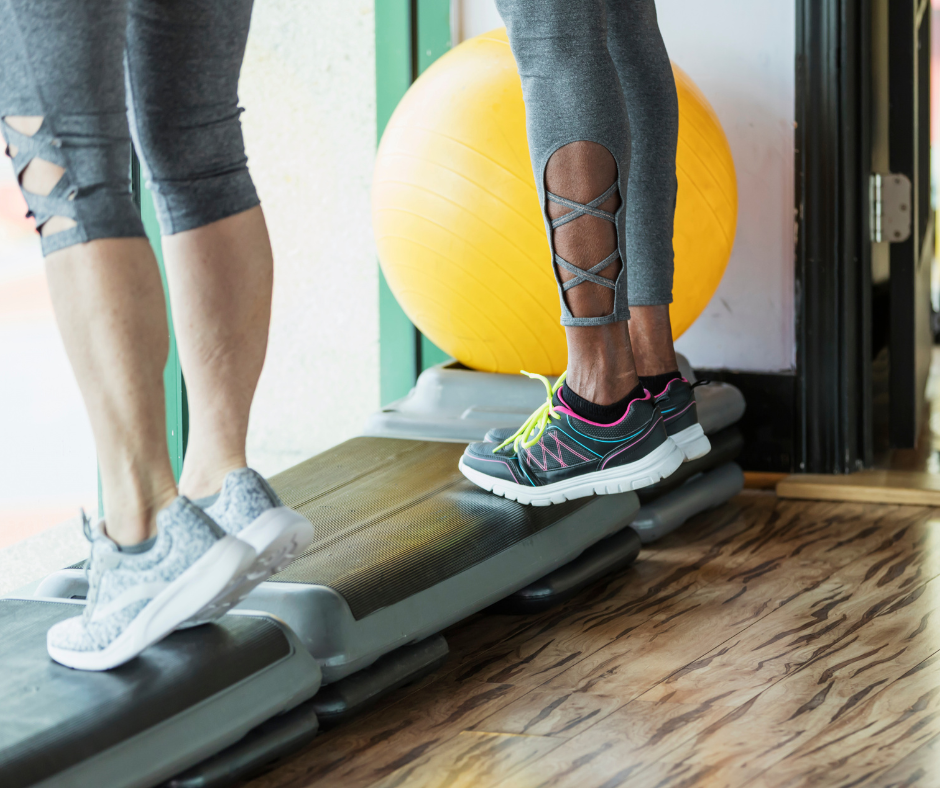
Calves and ankles. Directly connected to balance, stability and how the whole body functions from the ground up. Particularly relevant for anyone doing aqua, walking or standing work.
Try this: stand on the edge of a step with heels hanging off. Slowly lower both heels down below the step level and hold for 20 to 30 seconds.
You don't need to do all of these every time. A few done consistently after every session is where the difference shows up.
The Thing I'm Learning Again

I've been teaching people to take care of their bodies for over two decades. And it took a hip complaint to make me apply that more carefully to my own.
Small habits done consistently. That's the whole message. And it applies to me just as much as anyone else.
Five minutes after the workout. Starting now.
And if you'd love some support building movement and recovery habits that work with your body rather than around it, let's have a proper chat.
👉 Book your free initial coaching call here — I'd love to hear from you.
With love and a proper cool down,
Kellie 🌿


Comments